


With 100 Days to Go, 2026 World Cup Faces Mounting Challenges Amid Iran War and Mexico Violence
Mexico City/Atlanta, March 4: With just 100 days remaining until kickoff, the 2026 FIFA World Cup is confronting growing geopolitical and security challenges, as war involving Iran and rising violence in parts of Mexico cast uncertainty over the world’s biggest sporting event.
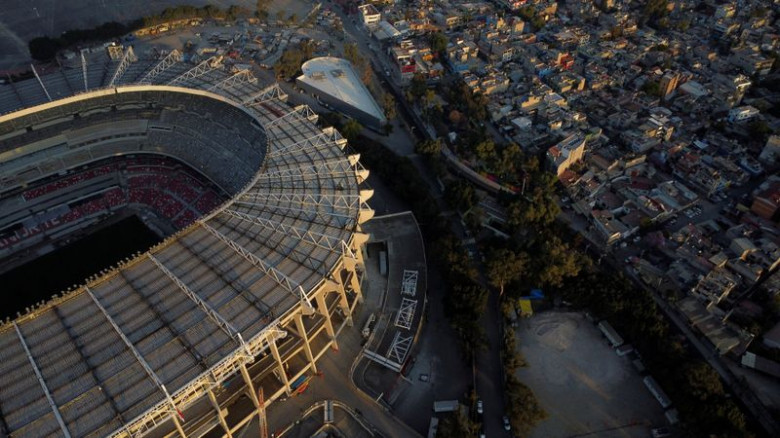
The tournament, co-hosted by the United States, Mexico and Canada, is scheduled to begin on June 11 in Mexico City, where Mexico will face South Africa at the iconic Estadio Azteca. The stadium will become the first venue to host matches in three different World Cups (1970, 1986 and 2026).
This edition will be the largest in history, expanding to 48 teams from 32 in 2022.
Iran’s Participation in Question
One of the most pressing concerns surrounds Iran’s participation. The United States is currently engaged in a military conflict with Iran, one of the first teams to qualify for the tournament.
Iran is slated to play two group-stage matches in Inglewood, California, and one in Seattle. However, uncertainty remains over whether the team will travel to the U.S.
Iran’s top football official, Mehdi Taj, expressed deep concern following recent US-Israeli strikes that killed Iran’s Supreme Leader Ayatollah Ali Khamenei and other senior figures. Despite the tensions, Iran has not announced a withdrawal — something no qualified team has done in 75 years of World Cup history.
Drawn alongside Belgium, Egypt and New Zealand, Iran is currently the second-highest ranked team in Asia. FIFA has not commented publicly on whether Iranian officials attended a recent preparatory workshop in Atlanta.
Fan Festivals Scaled Back in U.S.
Fan festivals, a staple of recent World Cups, are also being reduced in scale across several U.S. host cities.
New York/New Jersey scrapped its planned Fan Fest in Jersey City despite having begun ticket sales — a departure from the traditional free-entry model introduced at the 2006 tournament in Germany. Seattle has downsized and relocated its event to smaller venues, while Boston has shortened its festival to 16 days.
In Miami, organizers warned they may cancel their Fan Fest unless federal funding is secured. Kansas City officials have also flagged urgent funding needs to bolster security preparations.
Political wrangling in Washington, including a partial shutdown of the Department of Homeland Security, has added another layer of uncertainty over funding allocations.
Foxborough Permit Dispute
In Massachusetts, a dispute threatens matches scheduled at the New England Patriots’ stadium in Foxborough, which is set to host seven games, including a quarterfinal.
The town’s Select Board has refused to issue a permit unless it receives $7.8 million to cover policing and municipal expenses. Local authorities argue that they were not included in FIFA’s hosting agreement with Boston.
Ticket Price Backlash
Ticket pricing has drawn criticism from fans worldwide. FIFA reported receiving 500 million ticket requests for roughly 7 million available seats. While FIFA President Gianni Infantino has declared all 104 matches sold out, some fans were recently offered additional purchasing windows.
Initial ticket prices ranged as high as $8,680. Following backlash, FIFA announced that a limited number of $60 tickets would be made available to national federations for distribution to loyal supporters.
Meanwhile, resale tickets on FIFA’s official platform are largely priced above $1,000, raising further concerns about accessibility.
Violence in Mexico Under Scrutiny
Security concerns have intensified in Mexico after a surge in cartel-related violence in the state of Jalisco. Guadalajara, the state capital, is due to host four group-stage matches.
The unrest followed the military’s killing of a powerful cartel leader. However, Mexican President Claudia Sheinbaum has assured fans that the tournament will not be affected, and FIFA has expressed full confidence in Mexico’s ability to deliver a safe event.
Politics Overshadowing Sport
International politics have often loomed over major tournaments. Issues surrounding migrant worker rights and LGBTQ+ protections dominated headlines during the 2022 World Cup in Qatar, while geopolitical tensions marked previous editions in Russia, Brazil and South Africa.
As the countdown continues, organizers are balancing security, diplomacy, logistics and fan experience — all while maintaining that the 2026 tournament will be the most inclusive and successful in history.
Whether global tensions subside before kickoff remains uncertain, but for now, the world’s biggest sporting spectacle faces one of its most complex build-ups yet.


Leave A Comment