









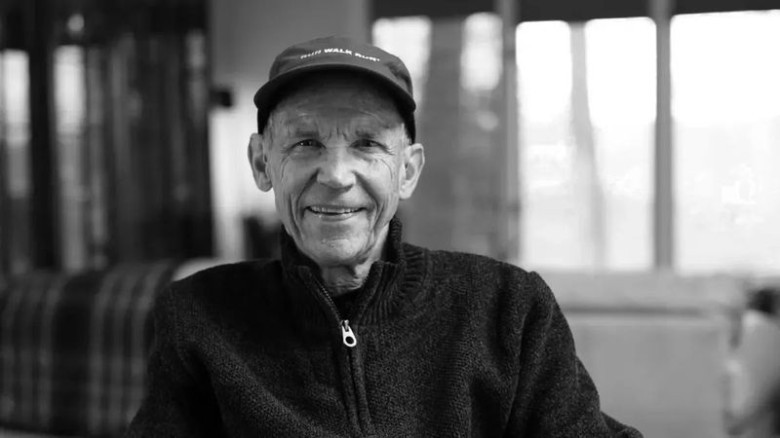
Jeff Galloway, Olympian Who Popularized Run-Walk-Run Method, Dies at 80
Jeff Galloway, Olympian Who Popularized Run-Walk-Run Method, Dies at 80
Jeff Galloway, an Olympian and influential running coach who inspired millions through his innovative run-walk-run training method, has died at the age of 80.
Galloway suffered a hemorrhagic stroke and died Wednesday at a hospital in Pensacola, according to his daughter-in-law, Carissa Galloway.
A member of the U.S. team at the 1972 Summer Olympics, where he competed in the 10,000 meters, Galloway went on to become one of the most recognizable figures in distance running. While his Olympic credentials earned him elite status, it was his commitment to everyday runners that defined his legacy.
In the final days of his life, Galloway’s influence was evident as supporters flooded social media with videos and messages, offering prayers and gratitude following news of his emergency neurosurgery. His family had publicly announced the procedure on February 20 and invited well-wishers to share their support.
Jim Vance, an endurance sports consultant based in San Diego, described Galloway as a pioneer who transformed how people viewed running.
“He removed the barrier to entry, which was mostly mental,” Vance told The Associated Press. “Running isn’t supposed to be a suffer-fest. It should be something peaceful, something enjoyable.”
Galloway’s philosophy centered on making running accessible and sustainable. His run-walk-run method, introduced in 1974 while teaching a course at Florida State University, encouraged runners to alternate between jogging and walking at set intervals. The idea was born when he noticed that many of his students had not exercised in years. By incorporating regular walk breaks, participants were able to finish races comfortably and confidently.
The approach also helped promote his newly opened specialty running store, Phidippides, and soon gained national attention. Galloway believed walk breaks reduced injury risk, conserved energy and improved overall performance. Over the years, he fine-tuned the ratios of running to walking based on pace and individual needs.
He practiced what he preached. During the 1980 Houston Marathon, Galloway walked through every water station and recorded a time of 2:16:35 — faster than his previous marathon performances completed without walk breaks.
Galloway shared his training principles through books, speaking engagements, retreats and online programs. He also served as the official training consultant for runDisney, a race series held at Walt Disney Company resorts, where he frequently ran alongside participants.
Even after surviving heart failure in 2021, Galloway remained determined to continue running. In a December interview with The New York Times, he said his mission at age 80 was to demonstrate that people could achieve extraordinary goals safely, regardless of age.
His impact extended far beyond elite athletics. Runners across the country credited him with giving them the confidence to attempt half-marathons, marathons and local fun runs they once thought impossible. Admirers shared stories of his encouragement at races and his willingness to stop mid-run to help struggling participants.
“He turned around and came back. He talked me through it,” one runner recalled of a 2011 half marathon in Kentucky. Others described discovering running later in life through his method and finding both health and joy in the process.
Colorado-based coach Bobby McGee said Galloway’s philosophy changed the culture of distance running.
“When people finish a race, they talk about their time,” McGee said. “Nobody asks them if they ran the whole thing.”
Throughout his lifetime, Galloway completed more than 230 marathons and remained a visible, energetic presence in the running community. His message was simple: running should be enjoyable, not intimidating.
Galloway is survived by two sons and six grandchildren. His legacy endures in the millions of runners who continue to embrace his run-walk-run approach — proof that sometimes slowing down can help people go the distance.


Leave A Comment