









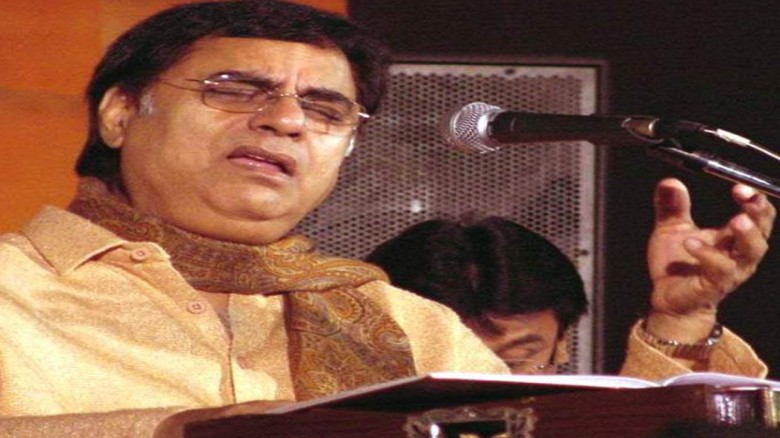
Why ‘Chitthi Na Koi Sandesh’ Became Closely Linked With Jagjit Singh’s Personal Grief
Some songs become much bigger than the films for which they were originally created, and Jagjit Singh’s “Chitthi Na Koi Sandesh” is one of them.
Released as part of the soundtrack of the 1998 Hindi film Dushman, the song was written by lyricist Anand Bakshi and composed by Uttam Singh. Jagjit Singh recorded one of its most remembered versions, while Lata Mangeshkar also sang a version for the film.
Built around the pain of separation and the absence of someone who may never return, the song developed an emotional significance far beyond its cinematic setting.
For many listeners, that emotion became inseparable from the personal tragedy Jagjit Singh had experienced years earlier.
The loss that changed Jagjit and Chitra Singh
On July 27, 1990, Jagjit Singh and his wife, singer Chitra Singh, lost their only son Vivek Singh in a road accident in Mumbai.
Vivek was just 20 years old.
The tragedy profoundly affected both parents.
Chitra Singh, who had built a celebrated musical partnership with Jagjit and performed alongside him for years, withdrew from singing following their son's death.
Jagjit eventually returned to recording and performing, but people close to his music often observed a deeper sense of sorrow in his work after the tragedy.
His 1991 album Hope arrived in the period following Vivek's death and reflected themes of loss, loneliness and emotional endurance that became increasingly associated with his later music.
Why listeners connected the song with Vivek
“Chitthi Na Koi Sandesh” was released around eight years after Vivek's death.
There is no confirmed record showing that Anand Bakshi specifically wrote the lyrics about Vivek Singh or that the song was originally conceived as a personal tribute by Jagjit Singh.
However, listeners familiar with the singer's life naturally connected its themes of irreversible separation with the loss he had endured.
Jagjit's restrained and deeply emotional delivery gave the song a sense of personal mourning that resonated strongly with audiences.
Over time, that association became part of the song's public memory, even though its official origin remained connected to the film Dushman.
Chitra Singh never returned to her former singing career
Vivek's death also marked a turning point in Chitra Singh's life.
She largely stepped away from professional singing after 1990 and did not return to the regular recording and concert career she had shared with her husband.
Jagjit himself later acknowledged that she had given up singing following their son's death.
The family experienced another devastating loss in 2009 when Chitra Singh's daughter Monica, from her first marriage, died by suicide.
Jagjit Singh continued performing and recording until his health deteriorated in 2011.
He died in Mumbai on October 10, 2011, at the age of 70 after suffering a brain haemorrhage.
A song that came to mean more than its original story
“Chitthi Na Koi Sandesh” remains one of Jagjit Singh's most widely remembered film songs.
Its enduring impact lies partly in Anand Bakshi's writing and Uttam Singh's composition, but for generations of listeners, Jagjit Singh's voice added another emotional dimension.
Knowing the loss he experienced does not prove that the song was written about his son.
It does, however, help explain why so many listeners hear something deeply personal in his performance.
More than two decades after its release, the song continues to be associated with grief, remembrance and the experience of missing someone who cannot return — emotions that became an inseparable part of Jagjit Singh's own life.


Leave A Comment