









Shipping Firms Wary of Trump Plan to Reopen Strait of Hormuz Amid Iran Threats
Commercial shipping companies and seafarers remain reluctant to sail through the strategically vital Strait of Hormuz despite proposals by Donald Trump to provide naval escorts and government-backed insurance for vessels.
The narrow waterway, located off the southern coast of Iran, normally carries about 20% of the world’s oil supply. However, on Wednesday no oil tankers passed through the strait, according to shipping industry sources, highlighting the scale of disruption caused by the escalating regional conflict.
Seafarers Fear Attacks
For many crew members, the threat of missile or drone strikes remains a major concern. Spanish seafarer Martín Izaguirre Salgado, who works on a liquefied petroleum gas tanker, said memories of a previous attack in the Red Sea still influence his decision-making.
Salgado recalled that four missiles exploded near his ship during an incident two years ago, scattering shrapnel across the deck. He still keeps fragments from the attack as a reminder.
“As long as they keep firing rockets or drones at merchant vessels, this unsafe feeling will remain,” Salgado said from a tanker currently anchored in the Persian Gulf.
Shipping Lines Halt Operations
Major global shipping companies including Maersk and Hapag-Lloyd have suspended most cargo bookings destined for Persian Gulf ports.
Maritime insurers have also withdrawn war-risk coverage for vessels operating in the region, making it financially risky for shipping companies to continue operations.
The disruption has already pushed global oil prices above $80 per barrel, the highest level since August 2024.
Doubts Over Naval Escort Plan
Under Trump’s proposal, US naval forces would escort commercial ships through the strait to ensure safe passage. However, industry experts say the plan may be unrealistic.
Gene Seroka said there is little confidence among shipping firms that such guarantees can be implemented effectively.
“I just don’t see how it is possible with all my years in this industry,” Seroka said, adding that companies are unwilling to risk their vessels and crew.
Security analysts also warn that escorting the large number of ships that normally pass through the strait—often 60 or more tankers per day—would require a vast deployment of naval assets.
Jakob Larsen noted that providing protection for every tanker in the threatened area would demand an extremely large military presence.
Risk to Global Supply Chains
The disruption is also raising concerns about the global supply chain. Shipping delays could lead to port congestion and shortages of empty containers, problems similar to those seen during the COVID-19 pandemic.
Sanne Manders said companies are reluctant to risk vessels worth hundreds of millions of dollars even if insurance is available.
Meanwhile, several Gulf countries—including Saudi Arabia, United Arab Emirates, Qatar, Bahrain, Kuwait and Oman—could face supply disruptions. These nations import roughly 85% of their food, making uninterrupted shipping routes crucial.
Crews Left Waiting at Sea
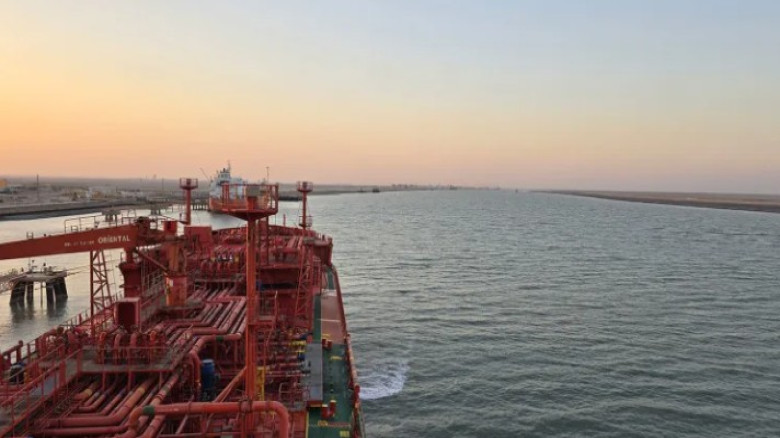
For now, dozens of vessels remain anchored in the Gulf waiting for conditions to improve. Salgado’s tanker has been stationed off the coast of Iraq since late February and is still waiting to load cargo destined for Bangladesh.
With his contract already due to end, Salgado said uncertainty about when ships will move again is taking a toll on crews.
“We are stuck and unable to predict when we will be able to go home,” he said.


Leave A Comment