









Putin Arrives in Delhi as India–Russia Seek Stronger Oil, Defence and Geopolitical Alignment
Putin Arrives in Delhi as India–Russia Seek Stronger Oil, Defence and Geopolitical Alignment
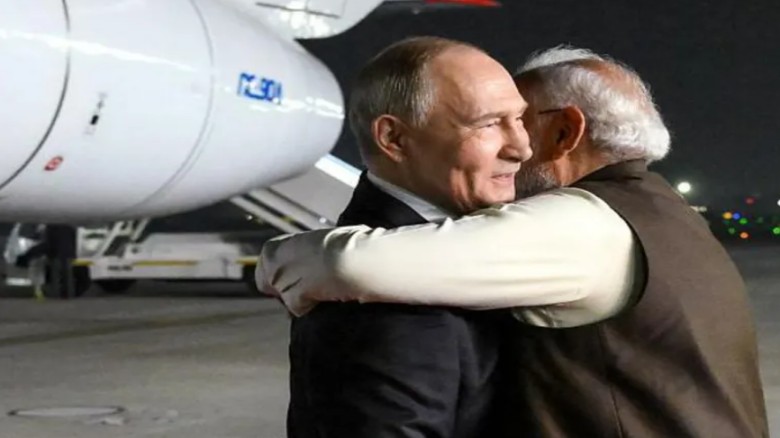
New Delhi: Russian President Vladimir Putin arrived in India on Thursday for a two-day visit, receiving a warm embrace from Prime Minister Narendra Modi ahead of the annual India–Russia summit. The high-stakes meeting comes at a time of shifting global alliances, rising geopolitical tensions, and increasing U.S. pressure on India over its continued imports of discounted Russian oil.
During the visit, Delhi and Moscow are expected to sign several trade and defence agreements. The trip follows Washington’s recent move to impose a 25% tariff on Indian goods, accusing New Delhi of indirectly supporting Russia’s war effort by purchasing large quantities of Russian crude.
Putin’s visit also coincides with ongoing talks between the U.S., Russia and Ukraine as the Trump administration attempts to negotiate an end to the conflict.
Russia Turns to India Amid Western Isolation
Russia views India as a crucial strategic partner, both economically and politically. With a population of nearly 1.5 billion and the world’s fastest-growing major economy, India has become an essential market for Russian exports — especially oil.
Before the Ukraine invasion, only 2.5% of India’s oil imports came from Russia. After sanctions hit Moscow, that share surged to 35%, driven by deep discounts as Russia lost access to European buyers. Although Indian imports have recently declined due to U.S. pressure, Putin is expected to push for a reversal.
Defence cooperation remains another cornerstone of the relationship. Reports suggest India is eyeing next-generation Russian platforms, including advanced fighter jets and air defence systems. Russia, facing domestic labour shortages, is also exploring opportunities to bring skilled Indian workers into its industries.
Putin’s presence in Delhi is equally symbolic. It allows the Kremlin to show that Western attempts at isolating Moscow have not succeeded. The visit follows Putin’s meeting with Chinese leader Xi Jinping earlier this year, when both leaders — along with Modi — were seen interacting warmly, signaling support for a “multi-polar world.”
Analysts say Russia’s current dependence on Asia highlights its estranged relationship with Europe, a contrast even to Soviet-era diplomacy. Despite the rhetoric of strong ties with China and India, many in Russia’s political and business elite reportedly still hope for future reconciliation with Europe.
A Crucial Test of Modi’s Strategic Autonomy
For India, the visit comes at a sensitive moment. Modi has long pursued what he calls “strategic autonomy”—maintaining close ties with Russia while strengthening partnerships with the West. This balance has become increasingly difficult to manage.
India-U.S. relations have deteriorated in recent months over unresolved tariff disputes under the Trump administration. European allies have also increased pressure on India, with the German, French and UK ambassadors jointly criticizing Moscow’s stance on Ukraine in a rare coordinated move.
Against this backdrop, Putin’s trip forces Modi into a delicate diplomatic position. He must demonstrate that India values its long-standing partnership with Russia, without jeopardizing crucial trade talks with the U.S. or alignment with European partners.
Trade and Defence: The Centrepiece of Talks
Bilateral trade between India and Russia has jumped to $68.72 billion in 2025 from just $8.1 billion in 2020 — largely due to discounted Russian oil. But the trade balance is heavily skewed in Russia’s favour.
With oil purchases declining under U.S. scrutiny, both countries are expected to explore new areas of economic cooperation. Defence is an obvious focus. Although India has diversified its defence imports, Russian equipment still forms the backbone of its military, including Sukhoi-30 fighter jets and the S-400 air defence system.
Recent skirmishes with Pakistan highlighted the value of Russian platforms, even as delays in Russia’s delivery timelines — caused by sanctions and war-related component shortages — raised concerns in Delhi.
India is reportedly interested in the S-500 system and the Su-57 fifth-generation fighter jet, especially after Pakistan inducted the Chinese J-35 stealth aircraft. Modi is expected to seek firm delivery commitments from Putin.
India also wants better access to the Russian consumer market, where items like smartphones, seafood and garments have barely made a dent despite rising engagement between the two nations.
Outcomes Expected
Analysts say India will aim to:
-
rebalance trade beyond oil and defence
-
secure guarantees on defence deliveries
-
expand access for Indian goods in Russia
-
maintain autonomy while keeping ties with the West intact
A Delhi-based think tank noted that Russia’s visit is less about Cold War nostalgia and more about negotiating supply-chain security in a world reshaped by sanctions and conflict.
A modest summit outcome would solidify cooperation in oil and defence. A more ambitious one could influence economic dynamics across the region for years to come.


Leave A Comment