









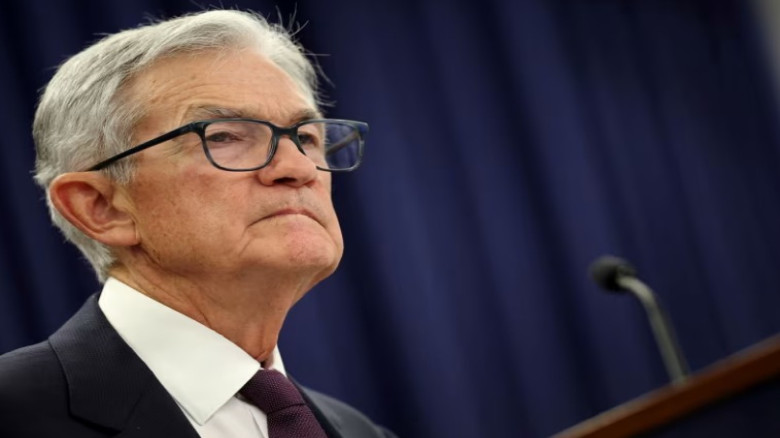
Fed May Base Iran War Response on Inflation Expectations, Says Jerome Powell
Fed May Base Iran War Response on Inflation Expectations, Says Jerome Powell
Washington: US Federal Reserve Chair Jerome Powell said on Monday that the central bank’s response to the ongoing Iran conflict will largely depend on how it influences Americans’ expectations about inflation.
Speaking at an event hosted by Harvard University, Powell emphasized that while the Fed عادة tends to “look through” temporary supply shocks such as rising oil prices, inflation expectations remain a critical factor in shaping monetary policy decisions. He noted that if expectations begin to rise significantly, the Fed may be forced to act more aggressively.
Powell also संकेत दिया that interest rates are likely to remain unchanged in the short term, despite the global energy shock triggered by the conflict. He explained that monetary policy operates with delays, meaning any tightening measures may take effect long after current oil price pressures ease.
The remarks come as tensions escalate in the Iran war, now in its fifth week, with US President Donald Trump warning of possible strikes on Iran’s energy infrastructure if a deal to reopen the Strait of Hormuz is not reached. The key shipping route handles around one-fifth of global oil supply, making it vital to international markets.
Oil prices surged following Trump’s comments, with Brent crude briefly rising above $116 per barrel before stabilizing. The increase has already pushed up fuel costs across the United States, while also driving higher prices for plastics and fertilizers.
Recent data from the University of Michigan showed that US consumer sentiment fell by 6% this month to its lowest level since December. The survey also indicated a sharp rise in short-term inflation expectations, although longer-term expectations have remained relatively stable.
The Fed typically places greater importance on long-term inflation expectations, seen as a measure of public confidence in the central bank’s ability to control price increases. However, economists warn that prolonged conflict could eventually push these expectations higher.
Earlier projections from the Federal Reserve suggested a possible rate cut later this year. However, with inflationary pressures intensifying due to the conflict, some analysts are now predicting a potential rate hike instead.
The situation presents a complex challenge for policymakers, who must balance rising inflation with concerns about a fragile labor market. Sustained high energy costs could slow economic growth and impact employment, complicating the Fed’s decision-making.
Powell acknowledged the uncertainty surrounding the economic outlook, stating that the impact of the war will depend on how long it lasts and how far it spreads. “No one has been able to successfully predict the economy,” he said, highlighting the difficulty of navigating the current global crisis.


Leave A Comment