









Andy Burnham Leaves Door Open to Tax Rises Ahead of Autumn Budget
Prime Minister Andy Burnham has declined to rule out tax increases in the government's first autumn Budget, acknowledging that the UK faces a difficult public-finance position.
Burnham said his government would take a cautious approach to economic policy and would not make commitments that could put jobs, household finances or the wider economy at risk.
The comments come ahead of Chancellor John Healey's first Budget, which is scheduled for October 28.
Questions over possible tax increases have intensified as the government attempts to balance its cost-of-living pledges and planned public-service reforms with pressure on borrowing and spending.
Burnham says spending commitments will be funded
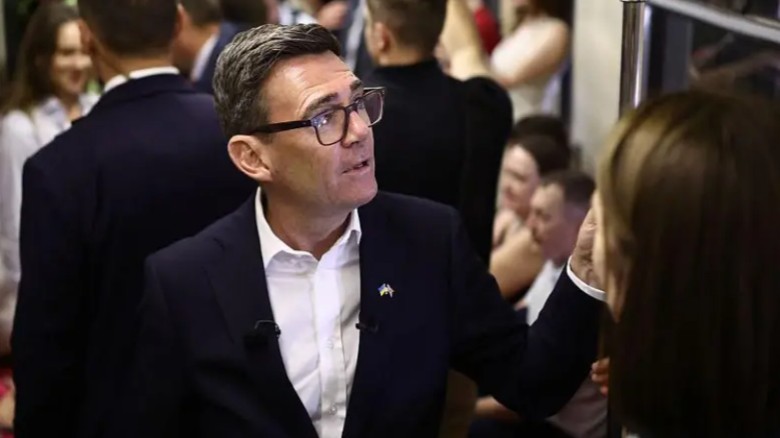
Speaking during his visit to Kyiv, Burnham defended measures already announced by his government, including a £2 cap on bus fares and the removal of VAT from household electricity bills.
He said funding had been redirected from other government priorities to pay for some of the measures.
One example is the cancellation of the previous digital ID programme, with money from the project being reassigned to cost-of-living policies.
Burnham said the measures announced so far represented initial steps rather than the full extent of the government's plans.
However, when questioned over whether additional spending could eventually require higher taxes, the Prime Minister stopped short of ruling them out.
He stressed that any decisions would need to be carefully considered and fully funded.
Burnham pointed to his decade leading Greater Manchester, arguing that his administration there had maintained disciplined finances and that he intended to follow a similarly cautious approach in Downing Street.
Public finances increase pressure ahead of Budget
The government is preparing its Budget against a challenging economic backdrop.
Official figures showed that UK public finances performed worse than expected in July, adding to concerns over the amount of room available to the Chancellor for additional spending.
Government finances recorded a £1.8 billion deficit during the month, despite strong income-tax receipts.
Borrowing during the first four months of the 2026-27 financial year also came in above forecasts from the Office for Budget Responsibility.
The figures have added to warnings from economists that Burnham and Healey could face difficult choices between increasing taxes, reducing spending in some areas or finding savings elsewhere in government.
The Prime Minister and Chancellor have said they intend to maintain the fiscal rules inherited from the previous government.
Those rules place limits on borrowing and require the government to demonstrate that day-to-day expenditure can ultimately be supported by revenues.
Inflation rises to 2.9%
Inflation is another challenge facing the government.
The Consumer Prices Index rose by 2.9% in the 12 months to July, up from 2.6% in June, according to the Office for National Statistics.
Higher living costs remain politically significant for the Burnham government, which took office promising to give households greater financial breathing space.
International instability and energy-market pressures are also creating uncertainty over the direction of prices during the coming months.
Against that background, the government has already announced measures designed to reduce household energy costs and transport expenses.
Burnham has acknowledged that these measures alone will not resolve the wider cost-of-living pressures facing households and has indicated that further announcements could follow.
Businesses urge government to control costs
Business organisations are also pressing the government to consider the impact of taxation and employment costs ahead of the Budget.
Confederation of British Industry chief executive Rain Newton-Smith has argued that rising employment costs are limiting the ability of some companies to recruit and create opportunities, particularly for younger workers.
The CBI has called for targeted measures that could encourage business investment, employment and economic growth.
Business groups are expected to scrutinise the October Budget closely for any changes affecting employers, investment or taxation.
Social care remains major funding question
One of the longer-term financial challenges facing the Burnham government is reform of social care.
The Prime Minister has placed improving social care among his policy priorities, but questions remain about how substantial reforms would be funded.
Defence commitments, public services and cost-of-living support are also competing for limited government resources.
Chancellor Healey has already told government departments that new priorities will need to be supported through savings and the reallocation of existing budgets rather than relying automatically on additional borrowing.
The government therefore faces pressure to demonstrate how its programme can be delivered while maintaining confidence in the public finances.
October Budget will set direction of new government
The October 28 Budget will be the first major opportunity for Burnham and Healey to set out the government's wider economic strategy.
Healey has said the Budget will maintain fiscal discipline while seeking to shift greater economic decision-making and investment beyond Westminster.
For households and businesses, however, one of the most closely watched questions will be taxation.
Burnham has not confirmed that taxes will rise.
But by refusing to rule out increases, the Prime Minister has left the option available as the Treasury works through the government's spending commitments and the state of the public finances ahead of October.


Leave A Comment