








West Asia Conflict Escalates as Iran Threatens Netanyahu and Trump Warns of More Strikes
March 15, 2026 — Tensions in West Asia continue to escalate as the conflict involving Iran, the United States, and Israel enters its third week with no sign of an immediate ceasefire.
Iran’s Revolutionary Guard issued a strong warning on Sunday, vowing to “pursue and kill” Israeli Prime Minister Benjamin Netanyahu if he remains alive. The threat surfaced amid widespread social media rumors claiming Netanyahu had been assassinated. However, the Israeli prime minister’s office dismissed the claims as false, stating that he is “fine.”
Meanwhile, U.S. President Donald Trump signaled the possibility of further military action against Iran’s key oil export facilities. Trump said U.S. strikes had already “totally demolished” most of Iran’s Kharg Island oil hub and warned that additional attacks could follow. Speaking to NBC News, he said the United States might strike the site again if necessary.
Trump also called on major global powers—including China, France, Japan, South Korea, and the United Kingdom—to deploy warships to secure the strategic Strait of Hormuz, through which roughly 20% of the world’s oil supply passes. The U.S. president said Washington would coordinate with allies to ensure safe passage for global energy shipments.
Iran has rejected the possibility of a ceasefire unless U.S. and Israeli airstrikes come to a complete end. Iranian Foreign Minister Abbas Araghchi said Tehran is open to considering diplomatic proposals that could lead to a “complete end” to the conflict, adding that mediation efforts by regional countries are underway.
At the same time, the conflict is increasingly affecting neighboring states. Gulf countries have reported multiple missile and drone attacks targeting energy infrastructure and military facilities. Saudi Arabia said it intercepted several drones heading toward key locations in Riyadh and the eastern region, while the United Arab Emirates reported a new missile attack on Sunday.
The war has also begun to trigger humanitarian concerns. According to the International Organization for Migration, thousands of Iranian civilians are fleeing their homes due to worsening security conditions. Nearly 32,000 people have reportedly crossed into Afghanistan, while several thousand others have entered Pakistan.
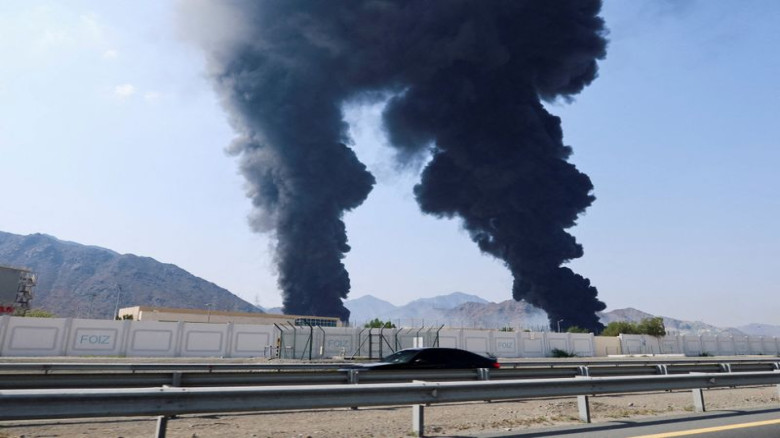
Environmental risks are also emerging after airstrikes on Iranian oil facilities produced heavy smoke that reportedly returned to the ground as toxic “black rain” in parts of Tehran, raising health concerns among residents.
With both sides intensifying their military actions and diplomatic talks still uncertain, analysts warn that the conflict could widen further and continue disrupting global oil supplies, regional security, and international air travel.


Leave A Comment