









Twin Capital Blasts in Delhi and Islamabad Heighten Regional Anxiety in a Year Marked by Volatility
Twin Capital Blasts in Delhi and Islamabad Heighten Regional Anxiety in a Year Marked by Volatility
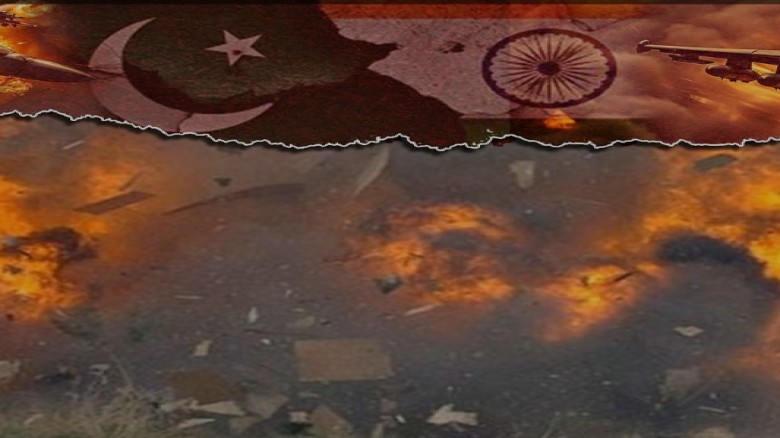
Two deadly explosions — one in India’s capital New Delhi and another barely a day later in Pakistan’s Islamabad — have rattled South Asia, raising fears of renewed tension between the two nuclear-armed neighbors in what is already shaping up to be an especially fraught year.
On Monday, a rare and powerful blast ripped through a historic Delhi neighborhood near the Red Fort, killing at least 10 people and injuring more than a dozen. Less than 24 hours later, a suicide bomber detonated explosives outside Islamabad’s heavily guarded judicial complex, leaving at least 12 dead and 20 injured.
While authorities in both countries have stated that the two incidents appear unconnected, their near-simultaneous occurrence has sent political shockwaves across India, Pakistan, and even Afghanistan, exposing deep-seated security vulnerabilities that many believed had long been contained.
Two Capitals, Two Shocks, One Region on Edge
Deadly attacks inside the capitals of India and Pakistan are exceedingly rare due to tight security and heavy surveillance. That they occurred in such close succession has heightened fears of wider instability.
Delhi Blast: A Rare Breach Near a Historic Landmark
The explosion in Delhi tore through an area adjacent to the Red Fort, a globally recognized heritage site surrounded by dense markets and tourist crowds.
The attack occurred the same day that police in Faridabad, a satellite city near the national capital, recovered thousands of kilograms of explosives from a village. A senior Faridabad police official confirmed to CNN that investigators are exploring potential links between the recovered material and the Delhi blast.
Security agencies from Delhi, Jammu and Kashmir, Uttar Pradesh, and Haryana have launched a joint probe to track the source of the explosives and identify wider networks.
Prime Minister Narendra Modi vowed swift action, saying those responsible would be brought “to justice.” On Wednesday, the Indian government officially classified the explosion as a terrorist incident perpetrated by “anti-national forces.”
Opposition leaders quickly criticized the government over the security breach.
“If the country is not safe… questions will be asked,” Congress spokesperson Supriya Shrinate told ANI, criticizing the prime minister for leaving on a foreign visit immediately after the attack.
Islamabad Suicide Bombing: The Deadliest in Nearly 20 Years
Across the border, Islamabad was struck by its deadliest attack in almost two decades. A suicide bomber detonated himself in the parking area of the city’s judicial complex — a strict security zone that houses several major government offices.
Witnesses described scenes of chaos and horror.
“If the courts… are not safe, then who is safe in this city?” asked advocate Jaseem Ahmed Bhutto, who was present during the explosion.
A Pakistani Taliban splinter faction, Jamaat-ul-Ahrar (JuA), claimed responsibility for the bombing. However, the main Pakistani Taliban organization (TTP) distanced itself from the attack.
Pakistan’s Defence Minister Khawaja Asif responded furiously, declaring a “state of war” and insinuating that militants operating from Afghanistan — with alleged links to India — were responsible.
A rise in militant violence since the Taliban takeover of Kabul in 2021 has deeply strained Pakistan–Afghanistan relations, culminating in deadly cross-border clashes earlier this year. Despite international mediation efforts in Qatar and Istanbul, the standoff persists.
Political Fallout: A Familiar but Dangerous Narrative Cycle
Within hours of the Islamabad attack, Pakistan’s Prime Minister Shehbaz Sharif blamed “Indian terrorist proxies," accusing New Delhi of directing attacks from Afghan soil — without providing evidence. India strongly rejected the charge as “baseless” and “desperate.”
Although India has not accused Pakistan of involvement in the Delhi blast, the history of mutual suspicion looms ominously.
Analysts say such blame cycles, while politically convenient, risk igniting broader confrontation.
“We are witnessing an increasingly fragile security environment across South Asia,” said Farwa Aamer of the Asia Society Policy Institute. “What’s needed now is restraint, reflection, and a commitment to reset the regional course toward stability.”
Michael Kugelman, a prominent South Asia analyst, warned of a “moment of great volatility,” noting that ongoing tensions between India, Pakistan, and Afghanistan could converge into a three-country crisis if accusations continue to escalate.
A Region Still Healing From Recent Conflict
The twin bombings come only months after India and Pakistan engaged in their most intense fighting in decades — a four-day conflict involving fighter jets, missile exchanges, and drone strikes.
That confrontation followed the massacre of 26 Indian tourists in Kashmir, after which India blamed Pakistan-based militants. Pakistan denied involvement, but India declared it would treat any such attack as an “act of war,” launching retaliatory airstrikes and triggering a swift counterattack.
Against this backdrop, this week’s explosions have reopened old wounds.
Fahd Humayun, a political scientist at Tufts University, noted that "many in Pakistan were watching the aftermath of the Delhi blast with bated breath,” expecting India to blame Islamabad as in past incidents.
So far, India’s restraint has surprised observers — but expectations for a strong response remain high.
“If the Indian government suggests the blast was a terrorist attack, the public will likely expect something big in response,” Kugelman said.
India’s National Investigation Agency (NIA), its premier counter-terrorism body, has taken over the probe into the Delhi explosion.
A Disturbing Warning for Urban India and Pakistan
For years, both capitals remained largely insulated from violence that often struck border regions or conflict-prone areas.
Now, the attacks signal a disturbing trend — major metropolises are no longer immune.
“This type of vulnerability is no longer just a symptom of the hinterland,” Humayun warned. “It’s coming to major cities.”
As investigations continue, the citizens of Delhi and Islamabad find themselves grieving, fearful, and searching for answers — while their governments brace for the political and strategic implications of two explosions that, while unconnected, have shaken the region with equal force.


Leave A Comment