









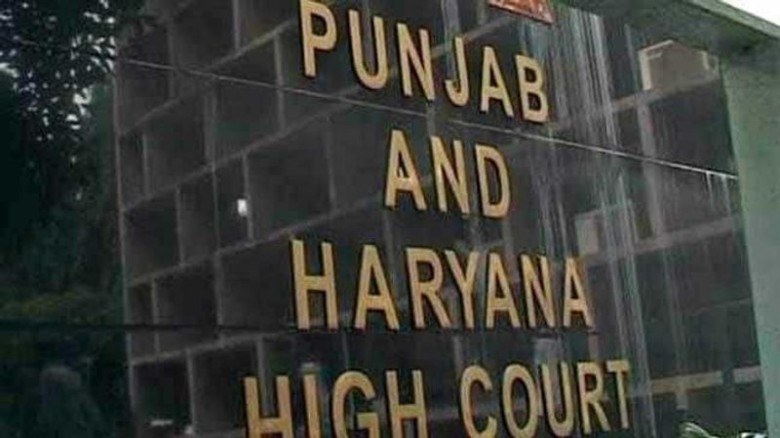
Punjab govt ordered to pay ₹5 lakh compensation for decades-long neglect of retrenched worker’s rights
Punjab govt ordered to pay ₹5 lakh compensation for decades-long neglect of retrenched worker’s rights
The Punjab and Haryana High Court has directed the Punjab government to pay ₹5 lakh in compensation to a former work-charged employee who remained trapped in litigation for nearly 30 years, despite a clear judicial precedent entitling him to service benefits.
In a strongly worded judgment, Justice Harpreet Singh Brar said the State’s prolonged refusal to extend a legally recognised benefit “compromises the very essence of a welfare state” and violates the principles of fairness mandated under Article 14 of the Constitution.
The court held that once a legal issue has been settled in favour of a group of employees, the State is duty-bound to extend the same benefit to all similarly placed individuals, instead of forcing them into “a fresh and arduous legal journey”.
State faulted for arbitrary denial
Justice Brar observed that the petitioner — appointed as an earthwork mistri in 1978 and retrenched in 1985 — was denied absorption even though the High Court had ordered regularisation of retrenched ASHP workers in 1989, and the Punjab Advocate-General had reaffirmed that position before the Supreme Court in 1995.
While several employees were absorbed following these directions, the petitioner was “arbitrarily excluded without justification”, the court said.
The judge emphasised that the State must act as “a catalyst for the resolution of disputes, not the cause of their proliferation”, criticising Punjab for fostering avoidable litigation that had its roots in the late 1980s.
Court cites need for consistency
Invoking the principle of stare decisis, Justice Brar said that once a competent court grants relief to a set of employees, others in identical circumstances must not be pushed into more litigation. Courts, he said, must ensure their decisions do not become “breeding grounds for fresh disputes”.
The 1989 ruling on ASHP employees was “declaratory in nature”, the bench noted, meaning it applied to all retrenched workers in the category—not just the original petitioners.
Compensation instead of reinstatement
Given the petitioner’s advanced age and the impracticality of ordering reinstatement with back wages after decades, the court declined to direct re-employment. Instead, it ruled that he had suffered “significant hardship” due to administrative apathy and ordered the government to pay ₹5 lakh as a lump-sum compensation.
Disposing of the petition, Justice Brar held that the petitioner’s ordeal stemmed entirely from the State’s repeated failure to comply with judicial directions and its own undertakings.
The ruling serves as a strong reminder, the court noted, that a welfare state must not itself become the source of prolonged injustice.


Leave A Comment