









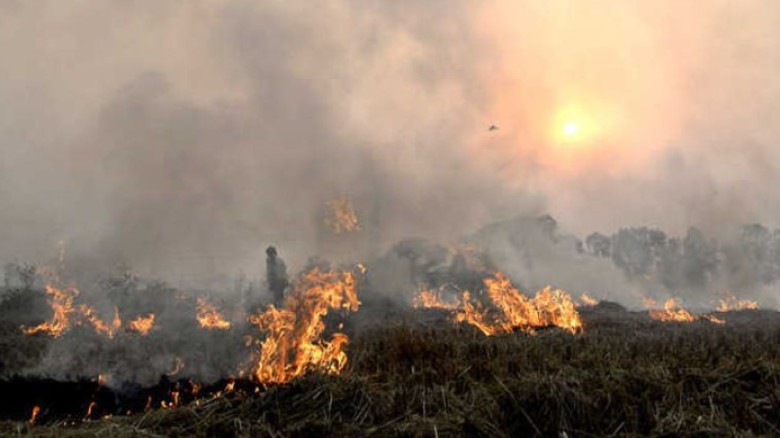
Punjab Records 1,152 Stubble-Burning Incidents on Diwali, Season Total Rises to 4,459
Punjab recorded 1,152 farm-fire incidents on Diwali, November 8, 2026, marking the highest single-day total of the current paddy harvesting season and raising fresh concerns about stubble burning and deteriorating air quality.
According to satellite-based monitoring data, the increase pushed the state's cumulative count of farm fires to 4,459, compared with 3,307 recorded up to November 7.
The latest figure represented a sharp increase from the previous day's 163 incidents. It was also nearly double the earlier seasonal peak of 584 farm fires recorded on November 3.
Sangrur district reported the highest number of incidents on Diwali, with 194 farm fires. Ferozepur recorded 157, followed by Bathinda with 132, Patiala with 92 and Barnala with 91.
Other affected districts included Moga, Ludhiana and Mansa, where satellite monitoring detected 73, 71 and 62 incidents, respectively.
The surge reversed Punjab's earlier improvement compared with the corresponding period in 2025. By November 7, the state had recorded 77 fewer farm fires than during the same period last year.
However, the Diwali increase took the season's total to 4,459 incidents, compared with 3,622 by November 8, 2025. This represented an increase of approximately 23% over the previous year's corresponding figure.
Agricultural experts have linked the pressure to clear crop residue with delays in paddy harvesting and the approaching wheat-sowing period.
Sukhbir Singh Dhaliwal, who has worked on paddy residue management, said irregular weather conditions during October delayed harvesting by approximately 15 days.
He explained that farmers face a narrow period to harvest their crops, sell produce at grain markets, receive payments and prepare fields for the next wheat crop. The first half of November is considered an important period for wheat sowing.
Stubble burning contributes to particulate pollution across northern India, particularly when combined with emissions from vehicles, industry, construction activity and firecrackers.
Dr Karamjit Singh Dhaliwal, Assistant Professor of Physics at Punjabi University, Patiala, explained that weak winds and changing weather conditions during November can trap pollutants close to the ground, contributing to persistent haze.
Satellite detections establish where active fires were recorded, but they do not independently identify who started them or why.
The latest figures have renewed attention on crop-residue management, enforcement measures and the availability of alternatives to burning. Reducing further incidents will depend on cooperation between farmers, agricultural authorities and the state government during the remaining harvesting period.


Leave A Comment