


Punjab Ministers Seek Talks With Employees as DA Arrears Dispute Escalates Ahead of September 8 Protest
Punjab Ministers Seek Talks With Employees as DA Arrears Dispute Escalates Ahead of September 8 Protest
The Punjab Government has stepped up efforts to ease its confrontation with government employees and pensioners over pending dearness allowance and arrears, with three Cabinet ministers publicly defending the state’s position while inviting employee organisations for further talks.
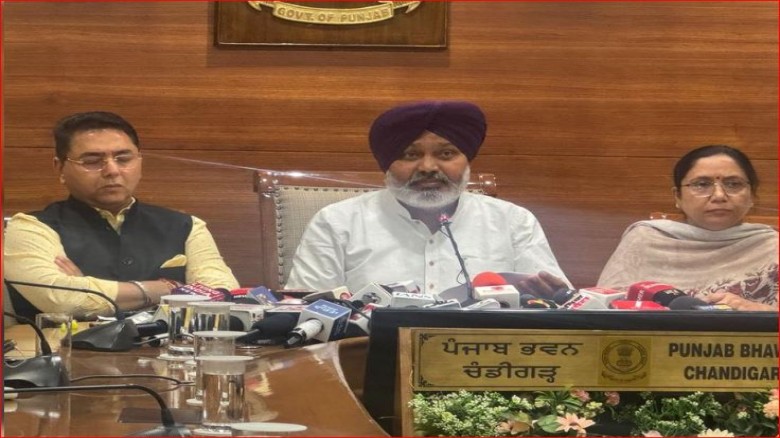
Finance Minister Harpal Singh Cheema, Industries and Commerce Minister Aman Arora and Social Security Minister Dr Baljit Kaur addressed the media in Chandigarh on Thursday as employee unions prepared for another round of protest action on September 8.
The dispute has intensified following the August 27 mass leave protest, subsequent show-cause notices issued to participating employees and the Punjab Government’s decision to challenge a High Court order on pending DA and dearness relief before the Supreme Court.
Ministers say government ready for dialogue
The three ministers said the government remained willing to discuss employees’ grievances and seek a resolution through dialogue.
Cheema said he was due to meet representatives of several employee organisations and maintained that the government had continued engaging with unions over their demands.
The outreach comes as employee groups have warned of further action if the show-cause notices issued after the August 27 protest are not withdrawn and their demands remain unresolved.
Employee organisations have announced a statewide mass casual leave for September 8 as part of an escalating protest programme.
₹14,191-crore arrears dispute reaches Supreme Court
At the centre of the dispute is an estimated liability of around ₹14,191 crore relating to pay, pension and DA/DR arrears.
On August 3, the Punjab and Haryana High Court dismissed appeals filed by the state and upheld directions requiring Punjab to release pending DA and DR instalments to employees and pensioners.
The court directed that the pending instalments be paid at rates corresponding to those given to All India Services officers serving in Punjab, in accordance with the Central Government pattern.
After the deadline set by the High Court expired, the Punjab Government approached the Supreme Court.
In its Special Leave Petition, the state has argued that paying approximately ₹14,191 crore within the period directed by the High Court is not legally and financially workable and has sought relief from the court.
The Supreme Court challenge means the legal dispute remains active.
Government says liability was inherited
Cheema told reporters that the ₹14,191-crore liability was not created entirely during the present AAP government’s tenure.
He attributed much of the accumulated liability to previous governments and said the Mann administration had introduced a phased plan for clearing outstanding payments.
According to Cheema, more than ₹4,500 crore has already been released to employees and pensioners against accumulated liabilities.
That figure represents the state government’s account of payments made and should be understood as a claim presented by the Finance Minister.
Cheema argued that his government had accepted responsibility for paying old arrears even though the liability had accumulated over previous administrations.
DA increased to 42%, says Finance Minister
Cheema said the government had increased the DA rate in three stages after taking office.
According to the figures presented by him, the rate increased from 28% to 34% in October 2022, then to 38% in December 2023 and to 42% in November 2024.
Employees and pensioners, however, have continued demanding the remaining pending DA instalments and arrears.
The High Court litigation has focused in part on whether Punjab employees and pensioners should receive DA and DR corresponding with the rates applied to All India Services officers in the state.
Government and High Court differ over DA parity
Dr Baljit Kaur defended the government’s interpretation of Punjab’s service rules, arguing that the state is not automatically required under its own rules to grant every DA increase at the same time and rate as the Central Government.
Punjab had made a similar argument during the court proceedings, maintaining that DA decisions depended on the state’s financial position.
The High Court, however, did not accept that position in its August judgment.
The court held that, after adopting the relevant Pay Commission framework, the state could not selectively deny the resulting DA benefits and directed Punjab to release pending DA/DR at rates corresponding to those being paid to All India Services officers serving in the state.
Punjab is now challenging that interpretation before the Supreme Court.
Cheema cites salary and pension burden
Cheema also argued that Punjab devotes an unusually large share of its revenue to salaries and pensions.
He said approximately 51% of the state’s revenue goes towards salaries and pensions, compared with what he described as an all-India average of around 38%.
The Finance Minister used those figures to argue that Punjab already carries a substantial employee-related financial burden.
He also claimed that, after basic salary and DA are taken together, Punjab government employees receive higher remuneration than their counterparts in several other states.
Those comparisons were presented by the government and have become part of its political and financial defence in the ongoing dispute.
Aman Arora questions immediate financial burden
Aman Arora described employees as an important part of the state administration and appealed for dialogue instead of confrontation.
At the same time, he accused opposition parties of attempting to use employee grievances for political purposes.
Arora said maintaining DA at the levels being demanded would involve an annual expenditure of around ₹6,500 crore.
He argued that such expenditure has to be considered alongside other state priorities including education, healthcare and infrastructure.
Employee organisations, however, maintain that DA and arrears are financial entitlements rather than discretionary expenditure.
Show-cause notices become another flashpoint
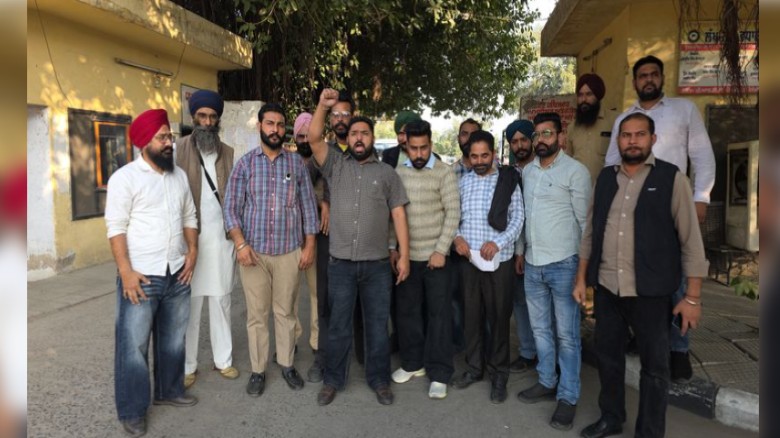
The dispute intensified after employees participated in mass casual leave on August 27.
The state subsequently directed departments to identify employees who remained absent and initiate action, including show-cause notices.
Cheema defended that action, describing unauthorised absence from duty as an issue the government was entitled to address under applicable service rules.
Employee organisations have strongly objected to the notices.
They have given the state government until September 7 to withdraw them and address outstanding demands, failing which ministerial staff have announced another mass casual leave on September 8.
Further demonstrations and rallies have also been announced for September and October.
Employees continue to demand pending DA and pension action
The employee agitation extends beyond a single DA instalment.
Unions have raised issues including accumulated DA arrears, implementation of pension-related commitments, pay anomalies, regularisation and action taken against employees involved in protests.
The confrontation has therefore developed into a wider dispute over the state government’s handling of employee and pensioner demands.
Legal and political pressure increases on Mann government
The Bhagwant Mann government is now facing pressure on two fronts.
Employee organisations are preparing for renewed agitation, while the state is simultaneously pursuing its challenge to the High Court’s DA judgment in the Supreme Court.
A contempt petition has also been filed in the Punjab and Haryana High Court alleging non-compliance with the earlier directions.
The government says it wants negotiations to continue and argues that Punjab’s financial position must be taken into account.
Employees and pensioners, meanwhile, maintain that the pending payments represent accrued entitlements that should be released.
With another mass leave action planned for September 8, the outcome of talks over the coming days could determine whether the confrontation escalates further.


Leave A Comment