






No Festivity for Punjab Farmers Amid Kharif Crop Shock: Low Yields, Poor Prices, and Fertiliser Shortage Add to Woes
No Festivity for Punjab Farmers Amid Kharif Crop Shock: Low Yields, Poor Prices, and Fertiliser Shortage Add to Woes
Chandigarh, This Diwali brings little cheer for Punjab’s beleaguered farmers as widespread crop damage, poor yields, and falling market prices have deepened the agrarian crisis in the state.
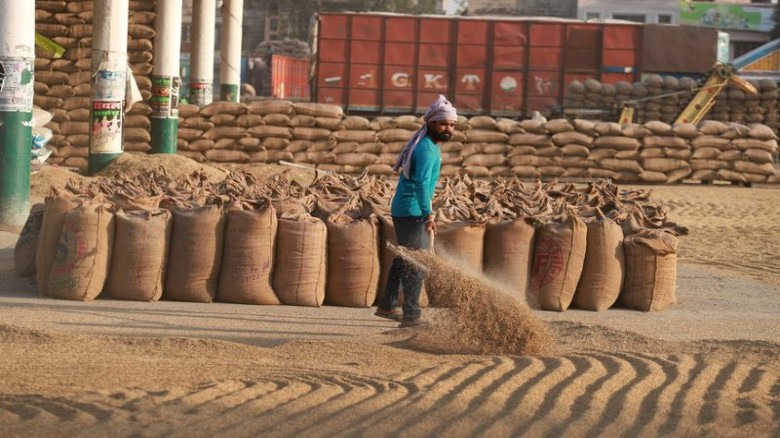
With around 4 lakh acres of crops lost during the recent floods, the situation has worsened following incessant post-monsoon rains, which significantly reduced non-basmati paddy yields by 5 to 8 quintals per acre. Adding to their distress, global economic uncertainty has driven down basmati prices, while cotton is selling below the Minimum Support Price (MSP). To compound matters, farmers are also struggling with a severe shortage of DAP fertiliser, raising concerns about the upcoming wheat crop.
“We have lost almost everything this season,” said Sikandar Singh, a farmer from Bhaini Ram Singh village in Fazilka. “The paddy on my 27 acres, including 25 acres taken on lease, was destroyed. We had to borrow money just to survive. There will be no celebration for us this Diwali.”
Singh shared that villagers received sweets and essentials from a spiritual leader in Sirsa as a gesture of solidarity. “It’s a kind act, but it reminds us of our financial misery,” he added.
In Nabha, farmer Gurbakshish Singh said that reduced yields and low market prices have made recovery nearly impossible. “The yield of non-basmati has fallen by 5 to 8 quintals per acre. Last year, I sold PUSA Basmati 1509 for ₹3,300 per quintal. This year, I barely got ₹3,000. Those who took land on lease have suffered the most,” he said.
Similarly, Jaspal Singh from Matran village near Sangrur lamented that the poor crop quality and yield have made it impossible to break even. “We took land on lease for ₹70,000 per acre, but the returns are nowhere close. The yield is low, and the quality doesn’t meet MSP standards. We still have to pay rent, so debt is inevitable,” he said.
Farm leader Balbir Singh Rajewal said that even cotton farmers are struggling, with no government procurement yet taking place. “Cotton is selling below MSP, and the agencies have not entered mandis. Everyone talks about crop diversification, but without government support, it remains an empty slogan. Losses in cotton will discourage farmers from planting it next season,” he warned.
According to official data, as of October 18, 1,03,360 quintals of cotton had arrived in Punjab’s mandis, but 57,267 quintals were sold below the MSP due to the lack of government purchase.
Meanwhile, farmers are also concerned about the upcoming wheat season, as reports of DAP shortage continue to surface across the state.
Darshan Singh, president of the Kularan Cooperative Society, said their society received just one truckload of DAP, while private traders hoarded large quantities. “We buy DAP for ₹1,350 per 50 kg bag from cooperatives, but private dealers are selling it for ₹1,800 to ₹1,900, sometimes forcing us to buy bundled pesticide packs,” he said. “At a time when farmers are facing such hardship, authorities must act against these black-marketing practices.”
With crop losses, falling prices, and rising input costs, Punjab’s farmers are facing one of their toughest years in recent memory. For many, this Diwali will not be about lights and celebrations—but about survival and uncertainty over what lies ahead for the next crop cycle.


Leave A Comment