









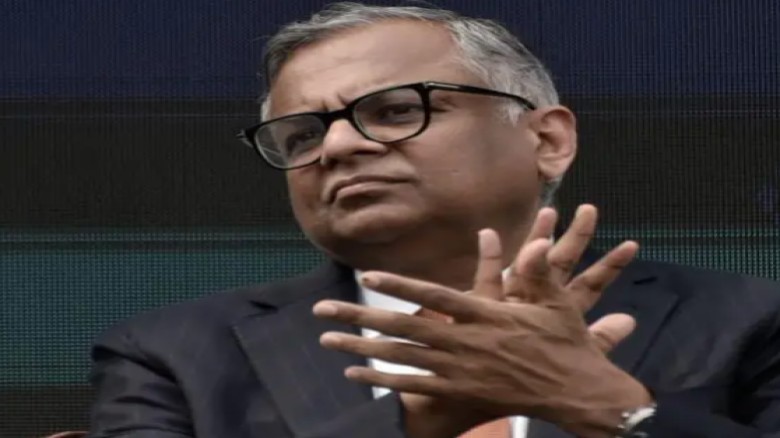
Tata Sons Faces Major Leadership Test as Search Begins for N Chandrasekaran’s Successor
Tata Group is entering a crucial leadership transition as the search begins for a successor to Tata Sons chairman N Chandrasekaran, who has decided not to seek another term when his tenure ends in February 2027.
The change at the top comes at a challenging time for one of India's largest and most diversified business groups, with major investments underway across aviation, semiconductors, electronics, electric vehicles and digital businesses.
Chandrasekaran informed the Tata Sons board on August 12 that he would not seek reappointment beyond his current term, which runs until February 20, 2027.
His decision followed a period of reported differences involving Tata Sons and Tata Trusts, the charitable organisations that collectively hold a controlling stake in the group's holding company.
Among the issues that have generated debate are the future ownership structure of Tata Sons, the possibility of a public listing and decisions over how much capital should continue to be committed to newer businesses.
Tata Trusts has since started the process of establishing a selection committee to identify and recommend the next chairman.
The person eventually chosen will inherit responsibility for overseeing a business empire that includes Tata Consultancy Services, Tata Motors, Tata Steel, Air India, Jaguar Land Rover, Tata Electronics and a growing portfolio of new technology and manufacturing ventures.
New businesses present major challenge
One of the biggest issues facing the next chairman will be the enormous investment programme undertaken by the group in recent years.
Tata has expanded heavily into sectors including semiconductor manufacturing, electronics production, electric-vehicle batteries, aviation and e-commerce.
The group is also developing semiconductor manufacturing operations in India while Tata Electronics has become an increasingly important player in Apple's supply chain.
At the same time, Tata continues to work on the transformation of Air India, which returned to Tata ownership after its acquisition from the Indian government in 2022.
These businesses offer significant long-term growth opportunities, but several require substantial capital before they can become consistently profitable.
Governance specialist Hetal Dalal of Institutional Investor Advisory Services told the BBC that the next Tata Sons chairman would need a wide range of skills because of the complexity of managing the group's businesses, its relationship with Tata Trusts and its dealings with regulators and government.
Finding someone with experience across such a broad range of industries could make the succession process particularly difficult.
Pressure on Tata's traditional businesses
The leadership transition also comes as the environment changes for some of the companies that have traditionally generated significant cash for the group.
Tata Consultancy Services has long been one of the group's strongest businesses and an important source of cash generation.
However, the global technology industry is undergoing significant changes because of artificial intelligence, automation and shifts in corporate technology spending.
Former Tata Sons strategy executive Nirmalya Kumar has argued that the next chairman will therefore need more than experience managing established businesses.
The new leader will also have to understand emerging business models and determine how Tata's newer investments can eventually generate sustainable returns.
That could involve deciding whether certain businesses require further expansion, restructuring or a reduction in investment.
Relationship with Tata Trusts will be critical
Another major challenge will be maintaining alignment between Tata Sons and Tata Trusts.
Tata Trusts is the controlling shareholder of Tata Sons and consequently has considerable influence over the long-term direction of the group.
Differences between the group's operating leadership and its controlling shareholder have previously created significant governance disputes.
Former Tata Sons chairman Cyrus Mistry's tenure ended amid a high-profile conflict involving the group's leadership and Tata Trusts.
The latest succession process has once again focused attention on how decisions are divided between Tata Sons and the Trusts.
Former Tata executive Mukund Rajan has argued that a large company cannot function effectively over the long term if its majority shareholder and management remain divided over business strategy.
Restoring confidence and ensuring cooperation between the two sides is therefore likely to be among the most important tasks facing Chandrasekaran's eventual successor.
Investors seeking greater clarity
The leadership transition is also being closely watched by investors because many major Tata companies are publicly listed even though Tata Sons itself remains privately held.
Developments at the holding company can therefore influence sentiment surrounding listed Tata businesses.
Corporate governance specialists have emphasised the importance of reducing uncertainty and clearly communicating how the succession process will operate.
The Tata Sons annual general meeting scheduled after Chandrasekaran's announcement was adjourned because of a lack of quorum, adding further attention to governance and leadership issues.
Despite the uncertainty surrounding the chairmanship, individual Tata companies continue to be led by their own management teams.
The larger question is who will eventually take responsibility for setting the strategic direction of the entire group.
The next Tata Sons chairman will need to balance ambitious investments in new industries with financial discipline, oversee some of India's best-known companies and maintain a workable relationship with Tata Trusts.
With the group undergoing one of the largest expansion phases in its history, the choice of its next chairman could shape Tata's direction for years to come.


Leave A Comment