









Rising Anti-India Sentiment Among Bangladesh Youth Ahead of February Elections
Rising Anti-India Sentiment Among Bangladesh Youth Ahead of February Elections
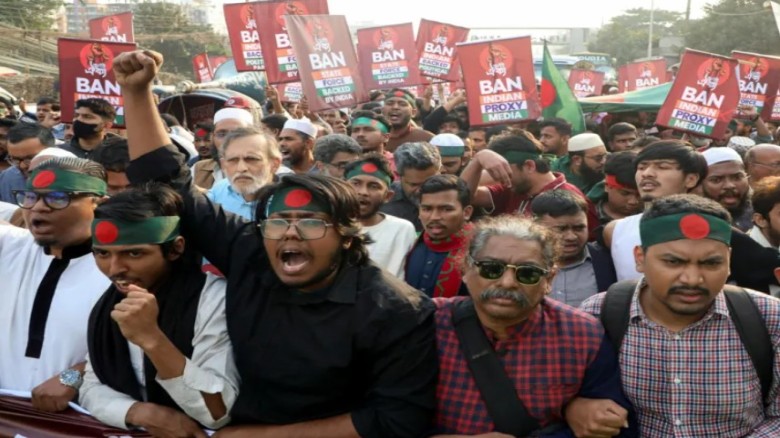
Dhaka, February 2026 – Anti-Indian sentiment is rising among Bangladesh’s younger generation as the country prepares for its 12 February general elections, political analysts and students say. Graffiti on Dhaka University walls, slogans in student gatherings, and social media campaigns reflect a growing perception that India has exerted undue influence over Bangladesh’s politics.
The backlash comes after the July 2024 uprising that ended Sheikh Hasina’s 15-year rule. Hasina, once seen as a pro-democracy icon, resigned amid accusations of autocratic practices and now lives in exile in Delhi. Bangladesh’s Awami League, which commanded about 30% of the vote, has been barred from contesting, leaving the liberal-centrist space open to the Bangladesh Nationalist Party (BNP) and a coalition including Islamist parties.
Many young Bangladeshis blame Delhi for supporting Hasina’s increasingly authoritarian regime. “The young generation feels India has been intervening in our country for many years, especially after the 2014 election, which was basically a one-party election,” said 24-year-old sociology student Mosharraf Hossain.
Observers note that India-Bangladesh relations, once considered a model of neighbourhood diplomacy, are now at a historic low. Avinash Paliwal, politics professor at SOAS University of London, said the decline is driven both by past political support for Hasina and by domestic rhetoric in India that has hardened anti-Bangladesh sentiment.
Tensions have also been fueled by cross-border incidents, including disputed elections, water-sharing disputes, trade restrictions, and controversial Indian media coverage. Recent decisions such as barring a Bangladeshi cricketer from the Indian Premier League and refusing to shift T20 World Cup matches from India to Sri Lanka have exacerbated resentment.
Despite India’s attempts to engage with various political stakeholders—including BNP leader Tarique Rahman and Jamaat-e-Islami leaders—officials admit that the public perception remains deeply negative. Kamal Ahmed, consulting editor of The Daily Star, called the current chill in bilateral relations “unprecedented,” noting that people-to-people and cultural ties have stalled.
The interim government led by Nobel laureate Muhammad Yunus has emphasized that the anti-India sentiment is largely directed at Delhi’s policies rather than the Indian people. “Our conflict is with the Indian government or the structure, not with people,” said Fatima Tasnim Juma of the cultural platform Inquilab Mancha.
Analysts argue that repairing ties will require more than diplomatic gestures. Mohammad Touhid Hossain, foreign affairs adviser to Yunus, said India missed a key opportunity to reset relations after Hasina’s resignation. Experts agree that while the rupture is serious, it is not irreversible. The foundation for future cooperation exists in shared geography, history, and culture, but rebuilding trust will require India to engage Bangladesh on equal terms, rather than through favoured intermediaries.
Political figures in Dhaka stress that a constructive relationship is possible if both countries act with sincerity and mutual respect. “The bigger the nation, the more the responsibility,” said Mahdi Amin, adviser to BNP leader Rahman, emphasizing that India must align its policies with the aspirations of Bangladeshis, not just the preferences of governments.
The February election could provide a turning point, but analysts warn that restoring India-Bangladesh ties will be a long-term process requiring political, cultural, and economic recalibration on both sides.


Leave A Comment