









Fuel Shortages Hit South Asia as Conflict Disrupts Global Energy Supply
Fuel shortages and rising energy prices are affecting millions of people across South Asia as disruptions linked to the ongoing tensions involving the United States, Israel and Iran continue to impact global oil supplies.
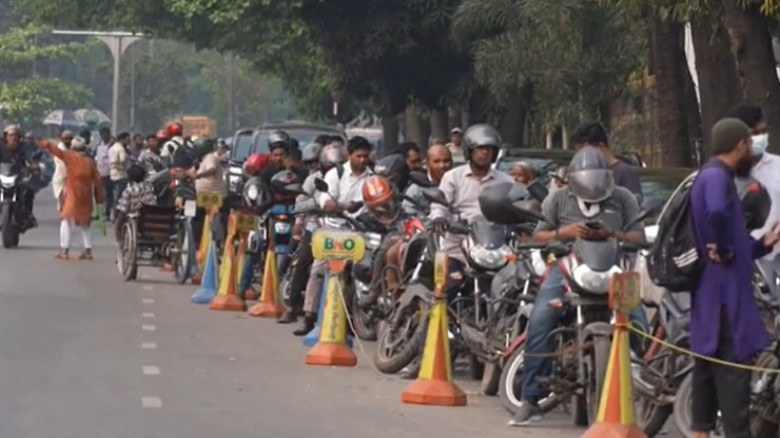
In Dhaka, the capital of Bangladesh, long queues have formed at fuel stations as motorists struggle to secure limited supplies of petrol and gas. Shakil Khan, a local motorcycle rider who earns a living transporting passengers and delivering goods, said the shortages are reducing his daily income as he spends hours waiting to refuel within government limits.
The disruption is partly linked to escalating tensions around the Strait of Hormuz, one of the world’s most important shipping routes for oil. Increased attacks and security concerns in the area have slowed maritime traffic, raising fears of global supply shortages.
Countries across Asia that rely heavily on imported energy are now feeling the impact. In India, residents in several cities have reported long waits to refill liquefied petroleum gas (LPG) cylinders used for cooking and transport. The government has ordered refineries to increase domestic LPG production and has redirected fuel supplies from industrial users to households.
According to energy analytics firm Kpler, India imports about 85% of its LPG and around half of its liquefied natural gas from the Middle East, making it particularly vulnerable to supply disruptions.
The crisis has also prompted emergency measures in neighboring Pakistan, where the government announced austerity steps including school closures and work-from-home policies to conserve energy.
Elsewhere in Asia, governments are introducing energy-saving policies. South Korea has imposed a fuel price cap for the first time in nearly three decades, while Thailand and the Philippines have urged government employees to work from home and reduce energy consumption.
In response to the worsening supply crunch, members of the International Energy Agency agreed to release 400 million barrels of oil from emergency reserves—the largest coordinated release in history.
The United Nations has warned that prolonged disruptions could have severe global consequences, affecting energy markets, maritime transport, and international supply chains.
Meanwhile, in Dhaka, motorists continue to queue for hours to secure fuel. Residents say the shortages are putting increasing pressure on household finances and the wider economy as uncertainty grows over how long the crisis will last.


Leave A Comment