





Delhi Chokes Day After Diwali as AQI Soars to ‘Very Poor’ Despite Green Firecracker Ban
Delhi Chokes Day After Diwali as AQI Soars to ‘Very Poor’ Despite Green Firecracker Ban
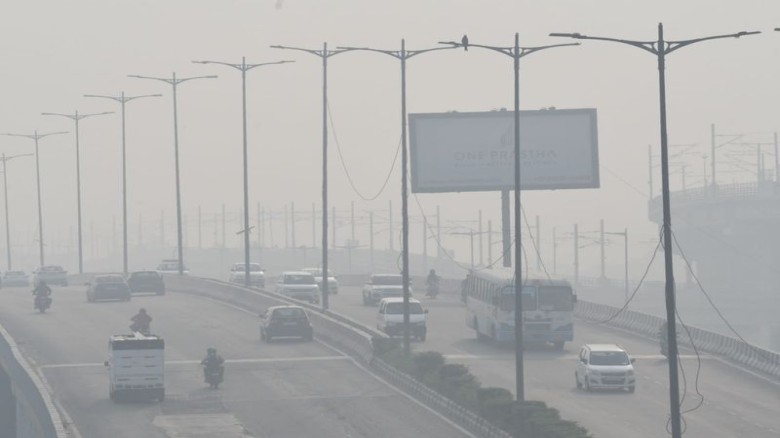
New Delhi: A day after Diwali celebrations, Delhi woke up to a thick grey haze and choking air as pollution levels spiked sharply across the city on Tuesday morning. Despite the Supreme Court’s restrictions on bursting only green firecrackers between 8 pm and 10 pm, many residents reportedly flouted the order, leading to a steep rise in air pollution overnight.
According to data from the Central Pollution Control Bureau (CPCB), the city’s Air Quality Index (AQI) stood at 352 at 8 am, placing it in the ‘very poor’ category. The AQI had already been climbing steadily through the night — from 346 at 5 am to 351 at 7 am.
At several locations, pollution levels breached the ‘severe’ mark. Wazirpur recorded an alarming AQI of 408, primarily due to high concentrations of PM 2.5 particles. In Anand Vihar, PM 2.5 was measured at 358 and PM 10 at 340, while RK Puram reported an AQI of 368.
Visuals from various parts of Delhi, including Dilli Haat (INA), showed heavy smog reducing visibility to such an extent that motorists were forced to drive with headlights on even during the daytime.
The CPCB’s SAMEER app, which provides real-time pollution updates, was not updated on Tuesday morning, leaving citizens without timely data.
On Monday, 36 of Delhi’s 38 air monitoring stations reported pollution levels in the ‘red zone’, indicating ‘very poor’ to ‘severe’ air quality across most parts of the capital. The city’s 24-hour average AQI recorded at 4 pm was 345, already in the ‘very poor’ range before Diwali night celebrations.
Experts warned that air quality could deteriorate further in the next 24–48 hours due to low wind speed, dense smog, and residual effects of firecracker emissions. Forecasts indicate that the AQI may slip into the ‘severe’ category on Tuesday and Wednesday, exacerbating health risks for residents, particularly children, the elderly, and those with respiratory conditions.
Despite years of restrictions and awareness drives, Delhi continues to face the annual post-Diwali pollution spike, highlighting the city’s persistent struggle against toxic air and poor enforcement of environmental regulations.


Leave A Comment