









139 Maoists Surrender in Two Days as Centre Reaffirms ‘Naxal-Free Bharat’ Goal
139 Maoists Surrender in Two Days as Centre Reaffirms ‘Naxal-Free Bharat’ Goal
New Delhi, October 15:
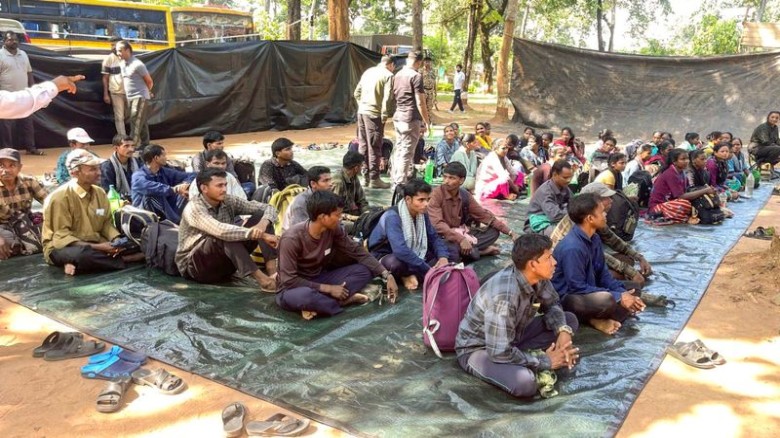
India’s decades-long battle against Left Wing Extremism (LWE) reached a major milestone this week, with 139 Maoist cadres surrendering across Maharashtra and Chhattisgarh in just two days. The development — led by the dramatic surrender of senior Naxalite leader Mallojula Venugopal Rao alias Bhupathi — marks a decisive step toward the government’s vision of a “Naxal-free Bharat.”
The surrender of Bhupathi, a top strategist of the banned CPI (Maoist) carrying a ₹6 crore bounty, along with 60 cadres in Maharashtra’s Gadchiroli district, set the tone for the wave of defections. The group handed over 54 weapons, including seven AK-47 and nine INSAS rifles.
Hailing the move as “the beginning of the end of the Naxal movement,” Maharashtra Chief Minister Devendra Fadnavis said the mass surrender was a “historic event for the country.” He urged the remaining Naxal cadres to give up arms, adding that the entire red corridor — spanning parts of Chhattisgarh and Telangana — would soon be free of extremism.
While celebrating the achievement, Fadnavis cautioned security forces to stay vigilant over the next two years, warning of potential retaliatory strikes. He also reaffirmed his government’s commitment to rehabilitate surrendered cadres and announced that Gadchiroli is emerging as a steel hub, attracting investments worth ₹3 lakh crore and expected to generate over one lakh local jobs.
Adding to the rehabilitation drive, Lloyds Metals and Energy Ltd (LMEL) announced it would train and employ surrendered Naxalites in the region’s new industrial projects.
Following the Gadchiroli surrender, Chhattisgarh witnessed a similar wave on Wednesday, with 78 Maoist cadres laying down arms in two separate incidents. In Kanker district, 50 cadres — including 32 women and senior regional leaders Rajman Mandavi and Raju Salam — surrendered before BSF officials, submitting a cache of weapons including AK-47s and an INSAS light machine gun.
In Sukma, another 27 Maoists surrendered before senior police and CRPF officers. Sixteen of them carried a collective bounty of ₹50 lakh, including Oyam Lakhmu of PLGA Battalion No. 1, who had a ₹10 lakh reward on his head.
Officials said most cadres cited disillusionment with Maoist ideology, internal violence, and the success of state surrender and development schemes as reasons for returning to the mainstream.
Chhattisgarh Chief Minister Vishnu Deo Sai described the latest developments as proof that “Naxalism is collapsing on every front and entering its final stage.”
The Union Home Ministry hailed the series of surrenders as a “giant stride” toward eliminating LWE. It reported that the number of most-affected districts has dropped from six to just three — Bijapur, Sukma, and Narayanpur, all in Chhattisgarh.
Similarly, the broader list of LWE-affected districts has been cut from 18 to 11, spanning seven in Chhattisgarh and one each in Jharkhand, Madhya Pradesh, Maharashtra, and Odisha.
According to the MHA, 312 Maoist operatives — including the CPI (Maoist) General Secretary and eight other top leaders — have been neutralized this year. Another 1,639 cadres have surrendered and joined the mainstream since January.
The government reaffirmed its target of completely eradicating the Naxal menace by March 31 next year, calling the recent surrenders a defining moment in India’s long campaign to restore peace and development in the affected regions.


Leave A Comment